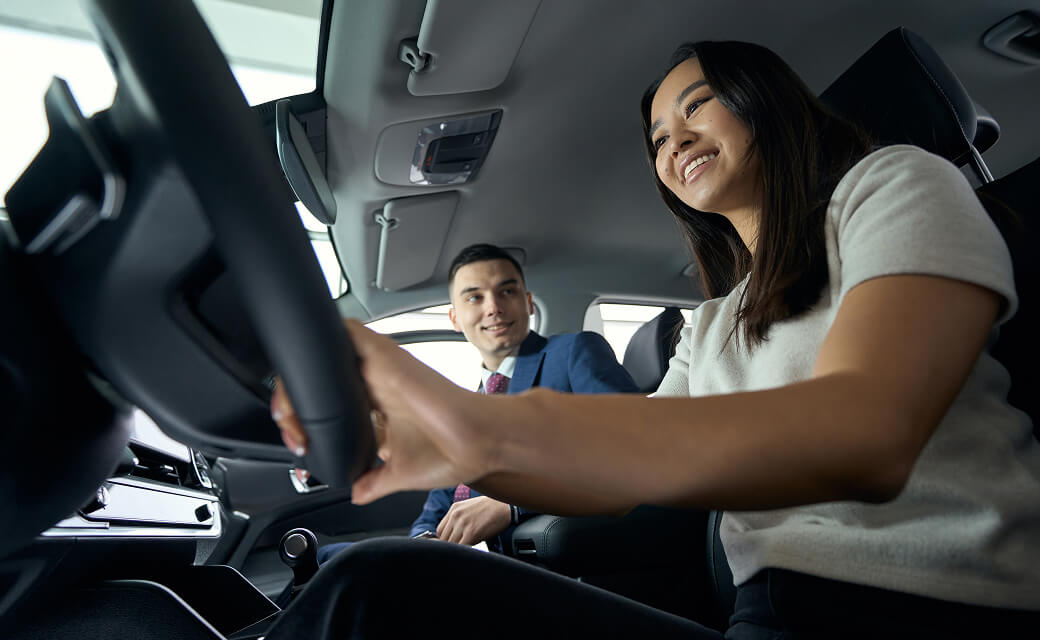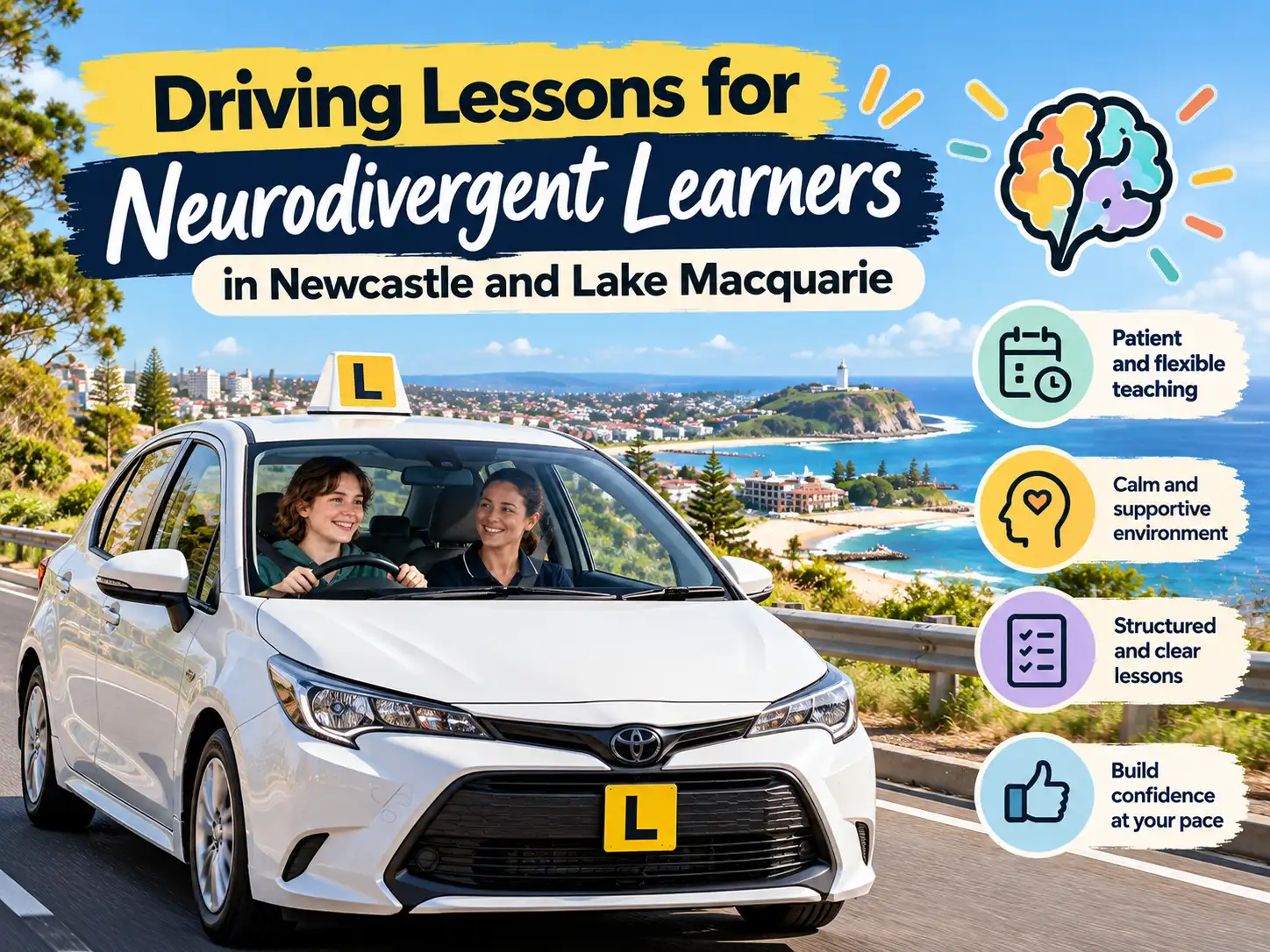
Many neurodivergent learners are capable, careful drivers. What holds them back is rarely ability. It is lessons that move too fast, instructions that are vague or shouted, and an environment that feels unpredictable. Driving lessons for neurodivergent learners work when the structure fits the learner, and when the instructor adapts to how that person takes in information.
Key takeaways
- Neurodivergent learners often do best with predictable, structured lessons and clear, literal instructions.
- One new skill at a time, in a calm and quiet car, builds confidence step by step.
- An automatic car frees attention for observation and decision-making.
- Being neurodivergent does not, on its own, stop anyone getting a NSW licence.
- If a condition or medication could affect driving, talk to your doctor about reporting it.
I work regularly with autistic learners, learners with ADHD, and learners who simply need things explained differently. This guide explains how I structure lessons across Newcastle and Lake Macquarie, what families can expect, and the NSW rules that apply to every learner. For more on why a calm environment matters, see how calm driving lessons reduce anxiety.
What makes lessons work for neurodivergent learners?
- Predictability. Each lesson has a clear plan, shared at the start, with no surprise changes to the route or skill.
- Clear, literal instructions. Directions are given early, in the same words each time, such as at the next intersection, turn left.
- One new skill at a time. Skills are broken into small steps and practised until they feel automatic.
- A calm, quiet car. No yelling, no rushing and no sarcasm.
- Space to process. Time to ask questions, and breaks when needed.
- Finishing on a positive. Every lesson ends with something done well.
How is a typical lesson structured?
- A short check-in: how you are feeling and what we will do today.
- A review of the last skill on a quiet street.
- One new skill, explained before we move, demonstrated if useful, then practised.
- A recap while parked: what went well, and one thing to practise with your supervisor.
- A clear note of what comes next, so the following lesson holds no surprises.
Lessons run in a 2021 Mazda 3 automatic with dual brake controls and a 5-star ANCAP safety rating. An automatic removes clutch and gear changes, freeing attention for observation and decision-making.
Practical strategies that help
Sensory comfort
We can adjust the temperature, keep the radio off, and choose quieter times and routes in early lessons. Small changes can make a big difference to focus.
Managing attention
For learners with ADHD, shorter focused tasks with clear goals often work better than long, open drives. Commentary driving, where the learner says what they see and plan, keeps attention on the road.
Rehearsal before the road
Walking through a manoeuvre while parked, or reviewing a route on a map beforehand, reduces uncertainty on the day.
What do NSW rules say?
The same rules apply to every learner. You must be at least 16 and pass the Driver Knowledge Test to get your learner licence, display L plates, drive with a supervisor who holds a full Australian licence, and keep a zero blood alcohol concentration. Learners must not use any mobile phone while driving, including hands-free. See learner driver licence.
How do professional lessons count toward your NSW log book?
In NSW, if you are under 25 you must log at least 120 hours of supervised driving, including at least 20 at night. One hour with a licensed driving instructor is recorded as three hours, capped at 10 actual hours, which adds 20 bonus hours. See using your learner driver log book.
Before your driving test you must also pass the Hazard Perception Test. Then the driving test assesses your driving on real roads.
Do medical conditions need to be reported?
Being neurodivergent does not, on its own, stop anyone getting a licence. NSW does require licence holders to report medical conditions that may affect their ability to drive. If you are unsure whether a condition or a medication applies to you, talk to your doctor. See how medical conditions affect your licence.
Real situations families ask about
A learner who shuts down when instructions are rushed
Directions are given early and calmly, and if a turn is missed we simply continue and find another way. Missing a turn is never a problem. Rushing it is.
A learner who needs to know the plan in advance
I can share the lesson focus and general area beforehand, so there are no surprises on the day.
A learner with ADHD who loses focus on longer drives
We use shorter segments with clear goals, commentary driving and planned breaks, then build duration gradually.
A parent unsure how to supervise practice
Use the same words I use, keep sessions short, and practise one skill at a time on familiar roads. Transport for NSW has helpful guidance for learner drivers and supervisors. My guide to choosing a driving instructor for your teen may also help.
Common mistakes families make
- Moving to busy roads before the basics are automatic.
- Changing routes or plans without warning.
- Giving instructions too late or in different words each time.
- Practising for too long in one session.
- Treating a slow start as a sign the learner cannot drive.
Penalties and demerit points
NSW learners and P1 drivers have only 4 demerit points, and P2 drivers 7. Fine amounts are not listed here because they change. See how demerit points work and Service NSW for current details.
A sample first five lessons
| Lesson | Focus | Environment |
|---|---|---|
| 1 | Car familiarisation, seat and mirror set-up, moving off and stopping | Quiet street close to home |
| 2 | Steering, low-speed turns, using indicators | Quiet residential streets |
| 3 | Give way rules at intersections and simple roundabouts | Familiar local roads |
| 4 | Speed control and following distance on busier roads | Local collector roads |
| 5 | Combining skills on a short planned route | A route shared in advance |
Preparing for the Hazard Perception Test and driving test
Both tests can feel daunting, so preparation is about familiarity. Practise hazard spotting through commentary driving, where the learner says aloud what they see and plan to do. Before your Hazard Perception Test, use the official practice resources. For the driving test, we rehearse the kinds of roads and manoeuvres you will meet so test day feels familiar.
Tips for parents supervising at home
- Use the same words for instructions as the instructor.
- Share the plan before each drive: where you are going and what you will practise.
- Keep sessions short and end on a success.
- Choose quiet times and familiar roads when introducing anything new.
- Stay calm and quiet during tricky moments. Talk it through once you are parked.
- See Transport for NSW guidance for learner drivers.
What to look for in an instructor
- Patience and a calm voice, even when things go wrong.
- Willingness to explain the plan and the reasons behind each skill.
- Consistent instructions, using the same words each time.
- Flexibility to adjust pace, route and lesson length.
- Experience working with autistic, ADHD and anxious learners.
- A safe car with dual brake controls.
Our guide to choosing a driving instructor for your teen has a fuller checklist for parents.
Building independence after the test
Passing the test is the start of independent driving, not the end of learning. In the first months on P plates, plan familiar routes, keep trips short, and build up gradually to new areas and busier times. Many neurodivergent drivers find that a predictable routine, such as the same route to work or study, builds confidence quickly.
If you have questions about how lessons work, see our FAQs.
Tips from Brian
- Progress is not a race. Readiness matters more than speed.
- Agree on words for common instructions and keep them consistent.
- Start on familiar, quiet streets close to home.
- Celebrate small wins. Confidence builds on them.
- See lesson packages for options built around steady, structured progress.
Frequently asked questions
Do you teach autistic and ADHD learners?
Yes. Lessons are structured, calm and adapted to how each learner learns best, with clear instructions and one skill at a time.
Is an automatic car better for neurodivergent learners?
Often, yes. An automatic removes clutch and gear changes, freeing attention for observation and decisions. Lessons run in a 2021 Mazda 3 automatic with dual brake controls.
Does being neurodivergent stop me getting a licence in NSW?
Not on its own. NSW requires licence holders to report medical conditions that may affect driving. Talk to your doctor if you are unsure.
How many supervised hours do NSW learners need?
Learners under 25 need at least 120 hours, including 20 at night. Instructor hours count as three, capped at 10 actual hours.
Where do lessons take place?
Across Lake Macquarie and Newcastle, with pickup and drop-off from selected suburbs.
How long are lessons?
Standard lessons are 60 minutes. Shorter, focused sessions can be planned within that time to suit the learner.
Can lessons be planned in advance so there are no surprises?
Yes. The lesson focus and general area can be shared beforehand.
Is there pressure to buy lots of lessons?
No. The focus is on getting each learner ready safely and efficiently, without unnecessary lessons.
Government references
This blog is for general information only. Always refer to NSW Government road safety resources for the most current rules.