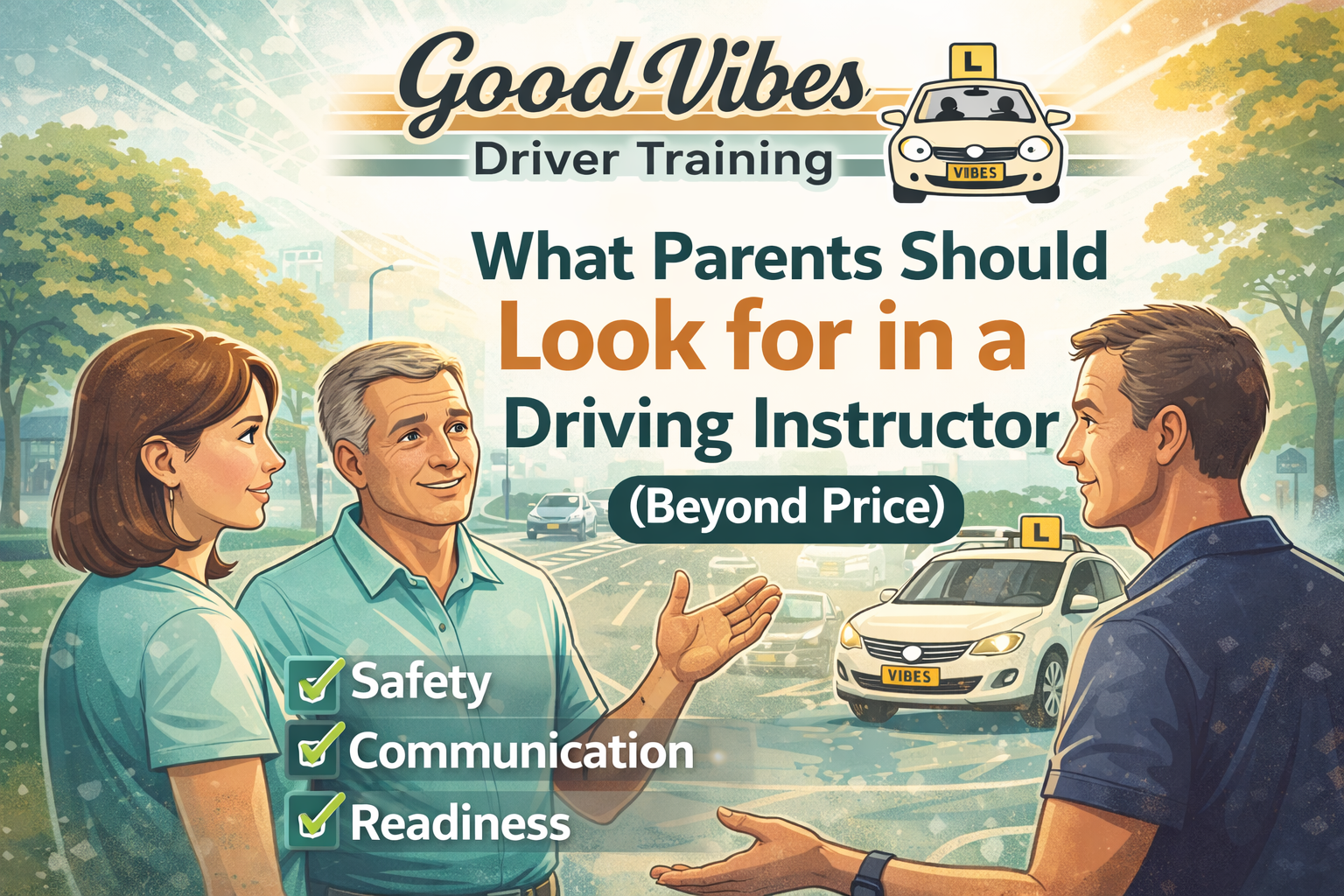
What Parents Should Look for in a Driving Instructor (Beyond Price)
If you’re a parent of a learner driver, chances are you’ve done this already: opened Google, typed in “driving lessons near me”, and sorted the results by cheapest first.
It’s a completely understandable instinct. Driving lessons add up quickly, and with school, work, and life expenses already stretching the budget, price feels like the logical place to start.
But here’s the real question many parents pause on after that first scroll: when it comes to your child’s safety on the road, what else should be on the checklist?
This guide is written parent-to-parent, with a clear goal — to help you understand what genuinely matters in a driving instructor, why price alone can be misleading, and how the right instructor can actually save time, money, and stress in the long run.
Teaching Style — Does It Match Your Child?
Not all teenagers learn the same way. Some are confident and decisive. Others are cautious, anxious, or easily overwhelmed. The most important thing a driving instructor brings to the car isn’t just knowledge — it’s adaptability.
A useful starting point is simply asking an instructor how they teach.
Red flags to listen for include phrases like:
“I’m tough but effective”
“They just need to be pushed”
Vague answers that focus only on passing the test
These approaches might work for a small number of learners, but for many teenagers they increase stress, reduce confidence, and slow progress.
Green flags sound very different:
Structured lessons with clear progression
Learner-led pacing rather than forced timelines
Calm explanations before challenging situations
Willingness to adjust approach when a learner freezes or gets frustrated
A powerful question to ask is: “How do you handle a learner who becomes overwhelmed or anxious?”
The answer will tell you almost everything you need to know.
At Good Vibes Driver Training, Brian’s approach is built around adapting lessons to how each individual absorbs information. The learner never has to fit the instructor’s style — the instructor adapts to the learner.
Safety Mindset — Beyond the Checklist
Any licensed instructor can teach road rules. What separates good instruction from great instruction is why safety habits are taught.
Some instructors focus almost entirely on test-day behaviours — ticking boxes, following routes, and memorising manoeuvres. While that may help a learner pass, it doesn’t always prepare them for real-world driving.
Brian’s nearly 20 years as a paramedic changes this perspective entirely.
He has attended serious crashes where the driver knew the rules but failed under pressure. Panic, poor anticipation, and rushed decisions — not lack of knowledge — were often the real cause.
That’s why Good Vibes lessons emphasise:
Anticipating hazards early
Maintaining safe following distances
Reading traffic flow rather than reacting late
Staying calm under pressure
The vehicle itself is also part of the safety equation. Learners at Good Vibes drive a modern automatic vehicle with a 5-star ANCAP safety rating and dual brake controls. For parents, that’s not a luxury — it’s reassurance.
Emotional Awareness and Communication
Learning to drive is emotionally loaded for teenagers. Fear of failure, embarrassment, pressure from peers, and worry about disappointing parents all show up behind the wheel — whether a learner says it out loud or not.
An instructor who dismisses emotions or creates tension can unintentionally stall progress. Anxiety narrows focus, increases hesitation, and makes lessons feel harder than they need to be.
What parents should look for is an instructor who:
Creates a calm, judgement-free environment
Communicates clearly with both learner and parent
Explains setbacks without blame
Frames mistakes as learning moments, not failures
Transparency matters. Parents should feel informed about progress, challenges, and readiness — not kept in the dark.
One parent, Mark, shared that his son felt comfortable straight away when learning with Brian. That early comfort isn’t just about feelings — it directly impacts performance, confidence, and safety.
Honest Lesson Planning — No Unnecessary Upselling
This is an uncomfortable truth, but one worth acknowledging: some instructors have a financial incentive to keep learners booking lessons longer than necessary.
That doesn’t mean most instructors are dishonest — but it does mean parents should ask clear questions upfront.
Good questions include:
“How do you assess when a learner is test-ready?”
“Do you ever recommend fewer lessons?”
“What happens if my child progresses faster than expected?”
A quality instructor puts readiness first, not revenue.
Brian’s commitment at Good Vibes Driver Training is simple: get learners test-ready as efficiently and safely as possible. Lessons are never dragged out, and packages aren’t pushed if they’re not needed. Progress is based on skill and confidence, not a predetermined number of hours.
Questions Parents Should Ask Before Booking
Before choosing any instructor, consider asking:
What is your teaching style, and how do you adapt to nervous learners?
What vehicle will my child be learning in, and does it have dual controls?
How do you communicate progress with parents?
What is your student success rate, and how do you define “test-ready”?
Do you specialise in anxious or neurodivergent learners?
How do you handle a bad lesson or a setback?
The way these questions are answered matters just as much as the answers themselves.
Why Cheap Isn’t Always Safe
Price comparisons make sense when buying products. Driving instruction isn’t a product — it’s a person shaping your child’s habits for life.
A cheaper lesson that results in:
Extra lessons due to poor confidence
Anxiety that slows progress
Bad habits that need correcting later
often ends up costing more in the long run.
More importantly, confidence gaps formed under poor instruction don’t disappear after the test. They can follow young drivers into late-night drives, wet highways, and unfamiliar roads — the situations where calm decision-making matters most.
The real investment isn’t just passing the test. It’s knowing your child has the habits and mindset to keep themselves safe long after the L plates come off.
What NSW Requires of Learner Drivers
In New South Wales, learner drivers must meet strict requirements under the Graduated Licensing Scheme.
According to Transport for NSW and Service NSW:
Learners must complete the NSW learner logbook, currently requiring 120 supervised driving hours, including night driving
Learners must pass the Driving Test to progress from Ls to P1
Learner drivers are subject to strict conditions and penalties for offences
Rules and requirements can change, so parents should always verify current information through official NSW Government websites.
Final Thoughts for Parents
Price matters — but it’s rarely the most important factor.
When choosing a driving instructor, look at teaching style, safety mindset, emotional awareness, communication, and honesty. Encourage your child to have a say, and trust your instincts after speaking directly with instructors.
Brian at Good Vibes Driver Training is always happy to answer questions before you book — no pressure, no upselling, just an honest conversation about whether it’s the right fit for your child.
Ready to learn to drive in a calm, supportive environment?
Book your automatic driving lesson with Good Vibes Driver Training — serving learners across Lake Macquarie and Newcastle with no judgement, no pressure, and a genuine focus on keeping your child safe for life.
https://goodvibesdrivertraining.com.au/book-now/
Government reference links:
https://www.transport.nsw.gov.au
https://roadsafety.transport.nsw.gov.au
https://www.service.nsw.gov.au
https://www.police.nsw.gov.au/road_safety
This article is for general information only. Always refer to official Transport for NSW and NSW Government resources for the most current road rules, licensing requirements, and penalties.