Learning to drive is meant to be a step towards independence — but for many learner drivers, it feels more like sitting an exam every time they turn the key.
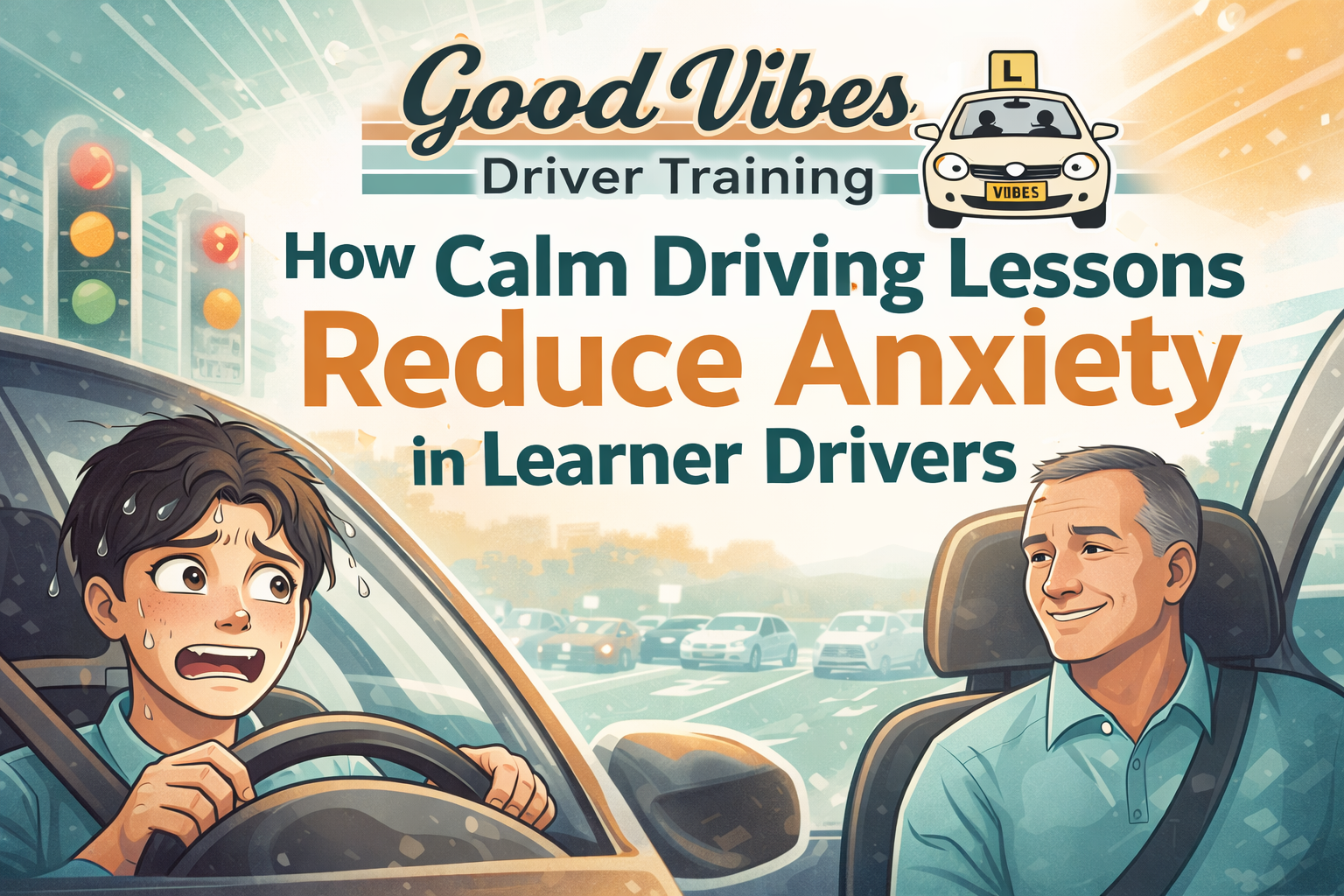
Picture this: you’re stopped at a busy junction, hands tight on the steering wheel, heart racing. Cars are piling up behind you. You know what to do — but your mind suddenly goes blank. The pressure builds, hesitation creeps in, and anxiety takes over.
If that sounds familiar, you’re not alone.
Driving anxiety is extremely common among learner drivers, especially teenagers and young adults navigating busy areas like Lake Macquarie and Newcastle. And importantly — it’s not a personal failure. In most cases, anxiety isn’t caused by a lack of ability. It’s caused by how someone is taught.
At Good Vibes Driver Training, calm, confidence-building lessons aren’t just a preference — they’re the foundation of how instructor Brian teaches. With nearly 20 years of emergency service experience as a paramedic, Brian has seen firsthand what happens when people feel rushed, pressured, or overwhelmed behind the wheel. That experience shapes every lesson he delivers.
Why Driving Anxiety Is So Common
For first-time learners, driving is one of the most mentally demanding skills they’ll ever learn.
In a single moment, a learner driver may be:
- Processing road rules
- Judging speed and distance
- Controlling the vehicle
- Watching mirrors and indicators
- Responding to other drivers
- Managing their own nerves
That’s a lot for any brain — especially one still developing confidence.
Add in social pressure, such as worrying about other drivers watching or reacting, and anxiety can spike quickly. Many learners also carry emotional baggage from:
- A previous near-miss
- A harsh or impatient instructor
- Being told they’re “too slow” or “not ready”
- Feeling rushed into traffic before they felt safe
Once anxiety takes hold, it can slow learning dramatically — not because the learner lacks skill, but because stress interferes with how the brain absorbs information.
How Stress and Anxiety Impact Driving Performance
From a neurological standpoint, anxiety triggers the body’s fight-or-flight response. This is useful in emergencies — but unhelpful when learning a complex skill like driving.
Under stress:
- Focus narrows, reducing awareness of surroundings
- Reaction times can become erratic
- Memory recall drops
- Learners may freeze, hesitate, or overcorrect
From Brian’s perspective as a former paramedic, this isn’t theoretical.
He’s attended countless serious crashes where panic — not lack of knowledge — was the deciding factor. Drivers knew the rules, but under pressure, their ability to apply them broke down.
That’s why calm learning environments aren’t a luxury — they’re a safety requirement.
Why Pressure-Based Teaching Often Backfires
Some learners are taught in high-pressure environments where mistakes are met with frustration, silence, or urgency. While this approach may work for a small minority, for anxious learners it often has the opposite effect.
Pressure-based teaching can lead to:
- Fear of making mistakes
- Learners stopping themselves from asking questions
- Surface-level learning rather than deep understanding
- Slower progress and reduced confidence
Ironically, this often results in more lessons, more stress, and higher costs — not because the learner isn’t capable, but because the environment is working against them.
At Good Vibes, Brian is clear on one thing: lessons are never dragged out for revenue. Progress is measured by readiness, not lesson count.
What a Calm Teaching Approach Actually Looks Like
Calm instruction isn’t passive. It’s structured, intentional, and grounded in safety.
Brian’s approach is built on three non-negotiables:
- No yelling
- No rushing
- No judgement
Each lesson follows a clear progression, with explanations given before entering challenging situations — not during moments of peak stress.
For example:
- Before approaching a multi-lane roundabout, Brian will calmly talk through lane choice, indicator use, and give-way rules
- Before merging onto faster roads, he’ll explain spacing, timing, and how to read traffic flow
The 2021 Mazda 3 used for lessons is fitted with dual brake controls, giving nervous learners peace of mind that mistakes can be handled safely. That reassurance alone often lowers anxiety significantly.
If a learner becomes flustered — for example, stalling at traffic lights or freezing in peak hour — the response is never pressure. Brian will calmly reset the situation, talk it through, and continue only when the learner is ready.
Pacing is learner-led. Always.
The Real Results of a Calm Learning Environment
When anxiety reduces, learning accelerates.
Learners taught in calm environments:
- Start enjoying driving sooner
- Retain information more effectively
- Ask more questions
- Build confidence through small, consistent wins
This creates a positive cycle — confidence leads to competence, and competence reinforces confidence.
One Good Vibes student, Sophie, described being extremely nervous before starting lessons. From the very first session, she felt calm — and eventually began enjoying driving. That shift is powerful. Enjoyment removes fear, and fear is the biggest blocker to progress.
Parents notice the difference too. Mark, whose son learned with Brian, appreciated the safety-first approach and said his son felt comfortable immediately — something that set the tone for the entire learning journey.
What NSW Requires of Learner Drivers
In New South Wales, learner drivers must meet strict requirements under the Graduated Licensing Scheme.
According to Transport for NSW and Service NSW:
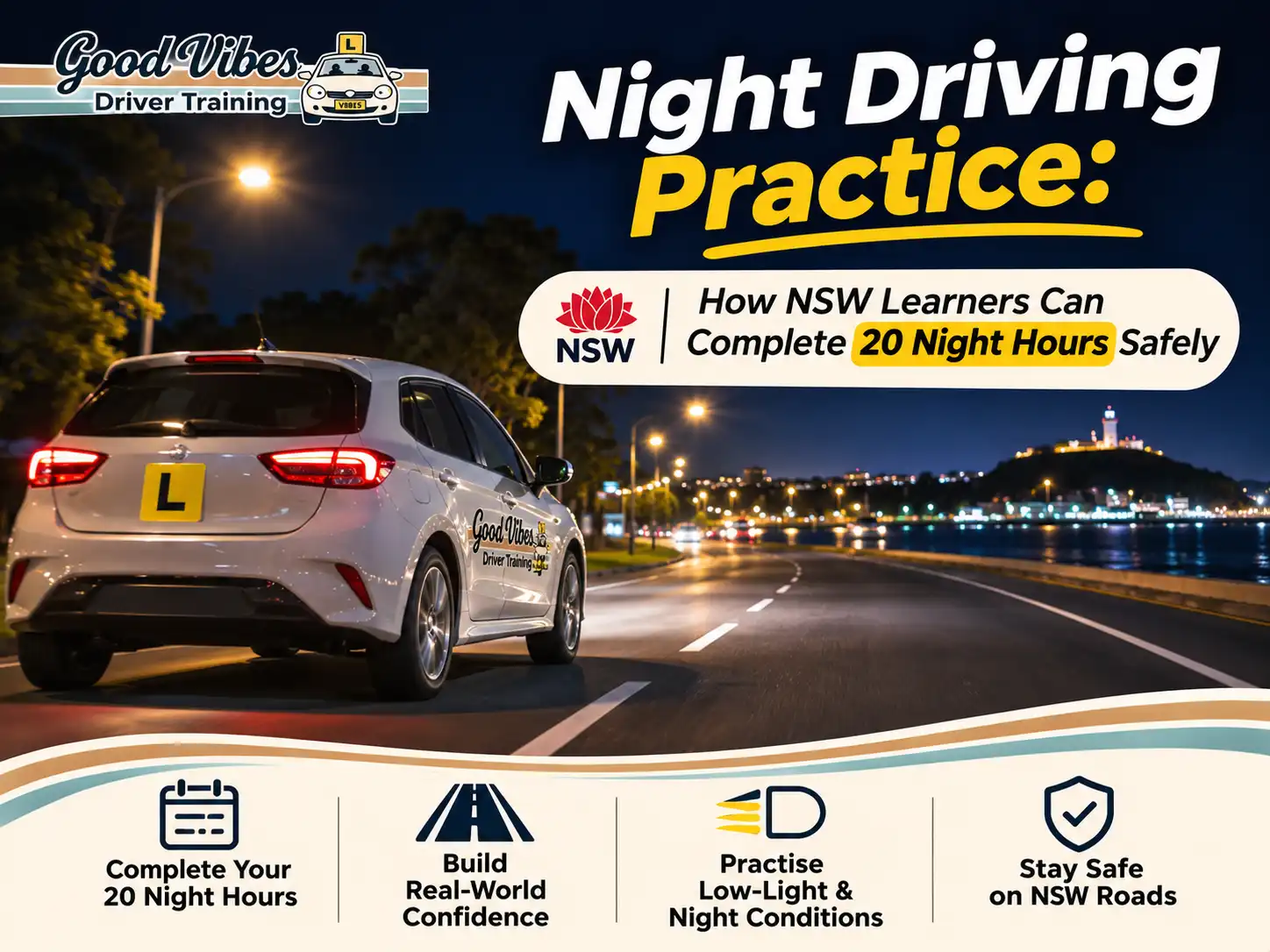
- Learners must complete the NSW learner logbook, currently requiring 120 supervised driving hours, including 20 hours of night driving
- Learners must pass the Driving Test to progress from Ls to P1
- Learner drivers operate under strict conditions and face serious consequences for offences
Rules and requirements can change, so learners and parents should always verify current information via:
Common Pitfalls Nervous Learners Face — and How to Fix Them
Some mistakes are common when anxiety is involved:
- Forgetting head checks before changing lanes
- Rolling past give way lines
- Incorrect mirror sequences during parking
- Losing composure after a minor error
Brian addresses these calmly and constructively. A missed head check isn’t a failure — it’s a reminder. A mistake doesn’t define the drive; it’s just feedback.
The focus is always forward: What’s the next safe step?
Expert Tips for Anxious Learners
Drawing on both instructional and emergency driving experience, Brian recommends:
- Build familiarity with the car before tackling complex traffic
- Use a consistent mirror–indicator–head check routine every time
- Practise in varied conditions to build real confidence
- Speak up if something feels uncomfortable — good instructors adapt
- Remember: calm decisions keep you safer than rushed ones
Demerit Points & Penalties in NSW
NSW learner drivers must avoid offences that result in licence suspension under the Graduated Licensing Scheme. Penalties and conditions vary by offence and are updated periodically.
Always check current rules via:
Final Thoughts
Anxiety doesn’t mean you’ll never be a good driver. More often, it means you care about getting it right.
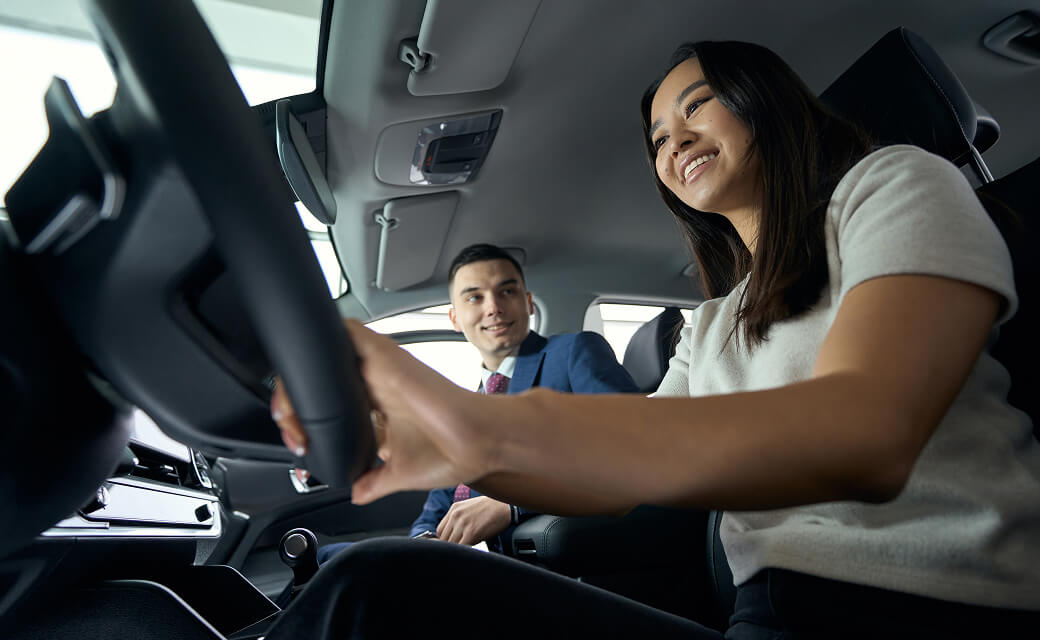
The right instructor, environment, and pace can transform anxiety into confidence — and that transformation starts with who’s sitting beside you.
If anxiety has been holding you back, Good Vibes Driver Training was built for exactly that.
Ready to learn to drive in a calm, supportive environment?
Book your automatic driving lesson with Good Vibes Driver Training — serving learners across Lake Macquarie and Newcastle with no pressure, no judgement, and a genuine focus on keeping you safe for life.
Business Hours
Monday – Friday: 6:00am – 6:00pm
Saturday: Limited availability
Sunday: Closed
📞 0405 588 791
🔗 https://goodvibesdrivertraining.com.au/book-now/
Compliance Disclaimer:
This article is for general information only. Always refer to official Transport for NSW and NSW Government resources for the most current road rules, licensing requirements, and penalties.